01
•
E-commerce
•
2025
Naija-Cart
A trusted mobile marketplace for Nigerian shoppers, built for convenience, security, and fast delivery.
Client
Naijacart
YEAR
2025
Role
UX/UI Designer
Industry
E-Commerce
Platform
Mobile app
Tools
Figma
OVERVIEW
Naija-Cart is a mobile-first e-commerce marketplace designed for Nigerian shoppers who struggle with trust, unreliable sellers, and poor delivery experiences. The platform connects buyers with verified vendors, offers secure payment options, and integrated logistics, moving users away from informal buying on WhatsApp and Instagram.
UIUX DESIGN
UX research
Mobile app
Case study
Problem
Nigerian online shoppers face significant trust issues, fraud, poor product quality, and unreliable deliveries make people hesitant to shop online. Informal platforms like WhatsApp and Instagram offer no buyer protection and no reliable delivery tracking.
The challenge: Design a shopping experience a first-time Nigerian online buyer would trust completely from browse to doorstep.
Solution
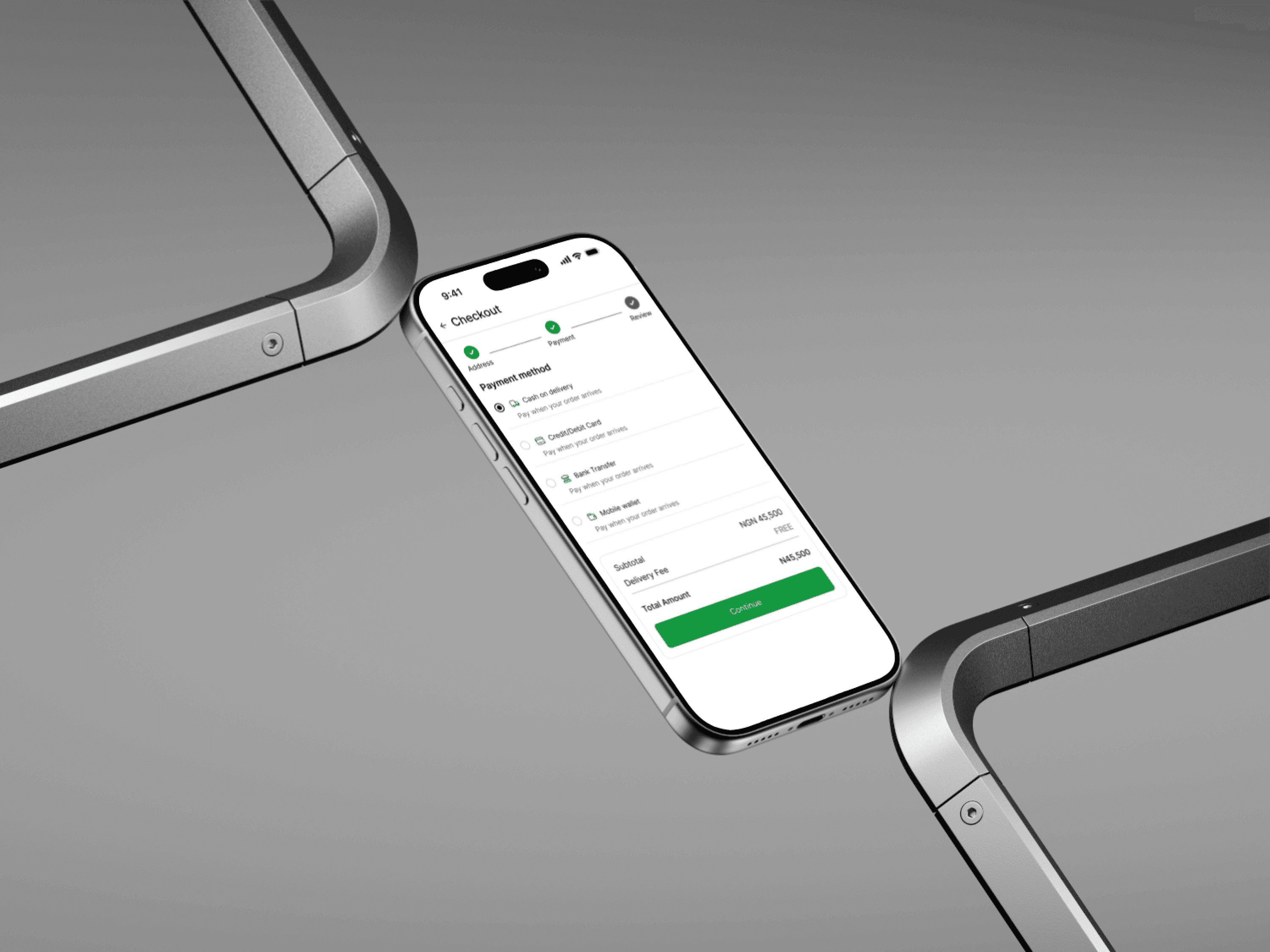
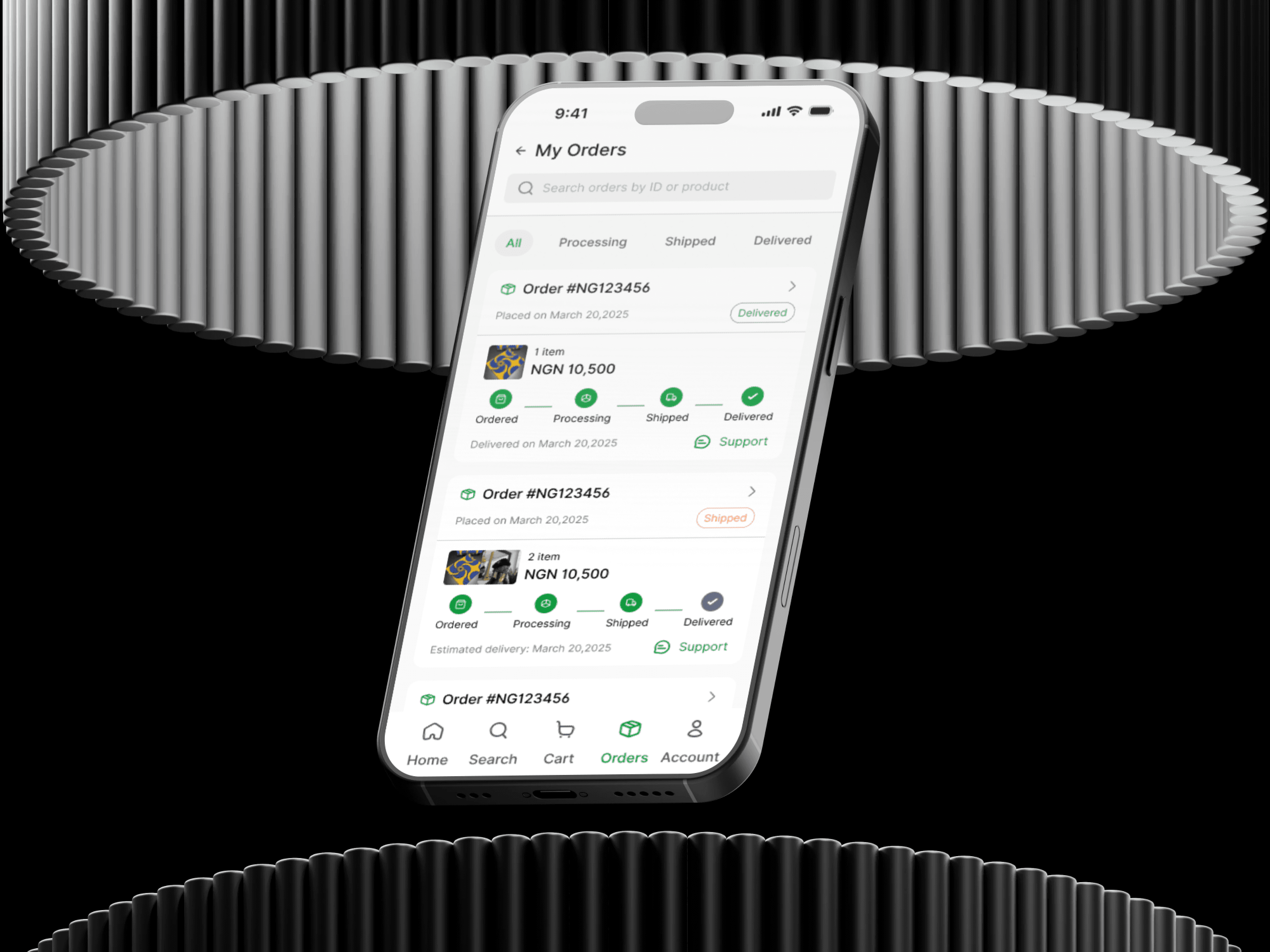
A clean mobile-first marketplace with verified seller badges, OTP-secured accounts, multiple payment methods including Cash on Delivery, and real-time order tracking, minimal steps to checkout and personalised recommendations.
PROCESS
Strategy
Mapped three user types: buyers, sellers, and admins, and identified the core trust and convenience gaps in the Nigerian e-commerce market through competitive analysis of existing platforms.
Research
Conducted user research around pain points with informal commerce on WhatsApp and Instagram. Identified key drop-off moments around payment anxiety and delivery uncertainty.
UI Design
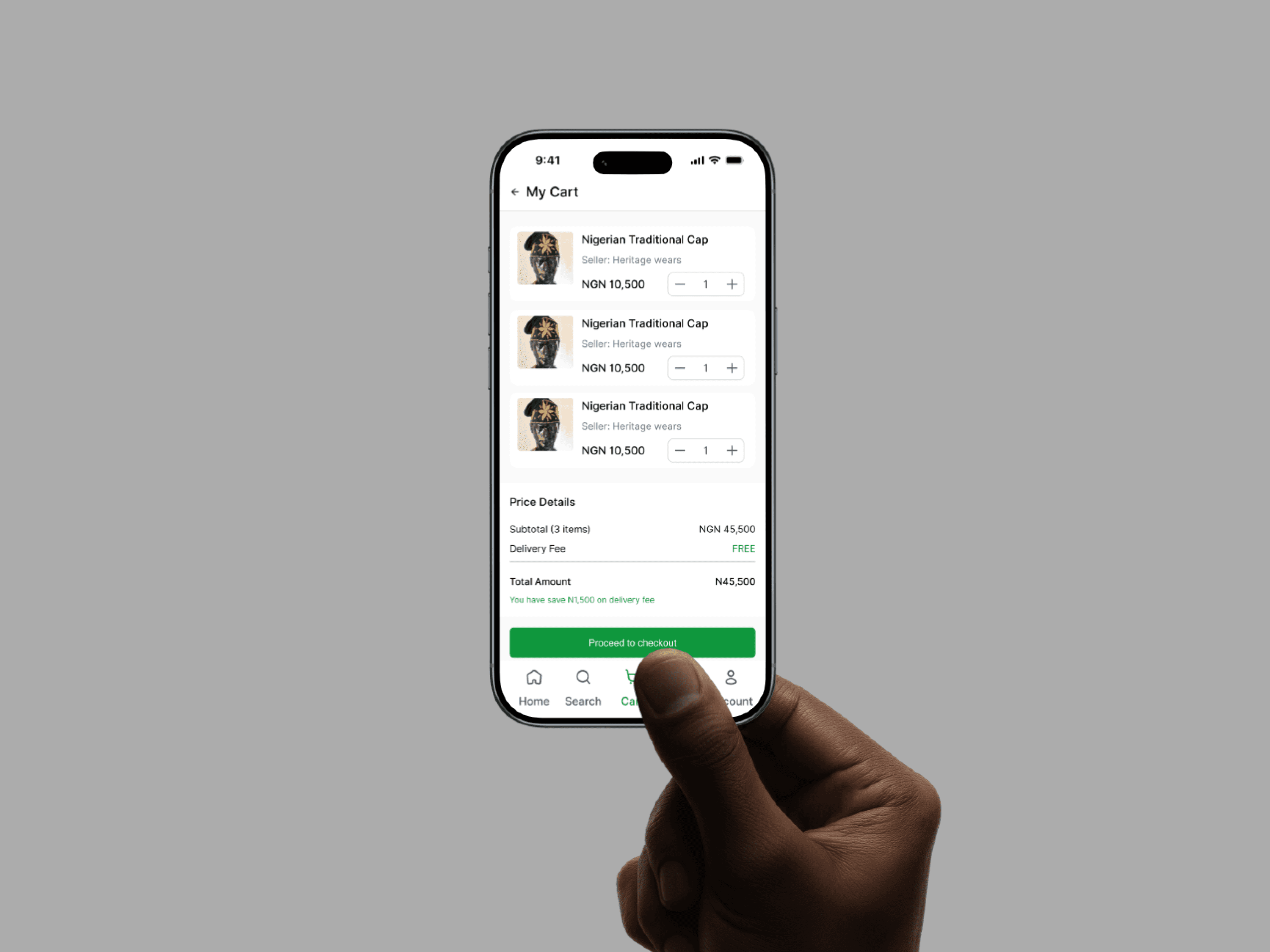
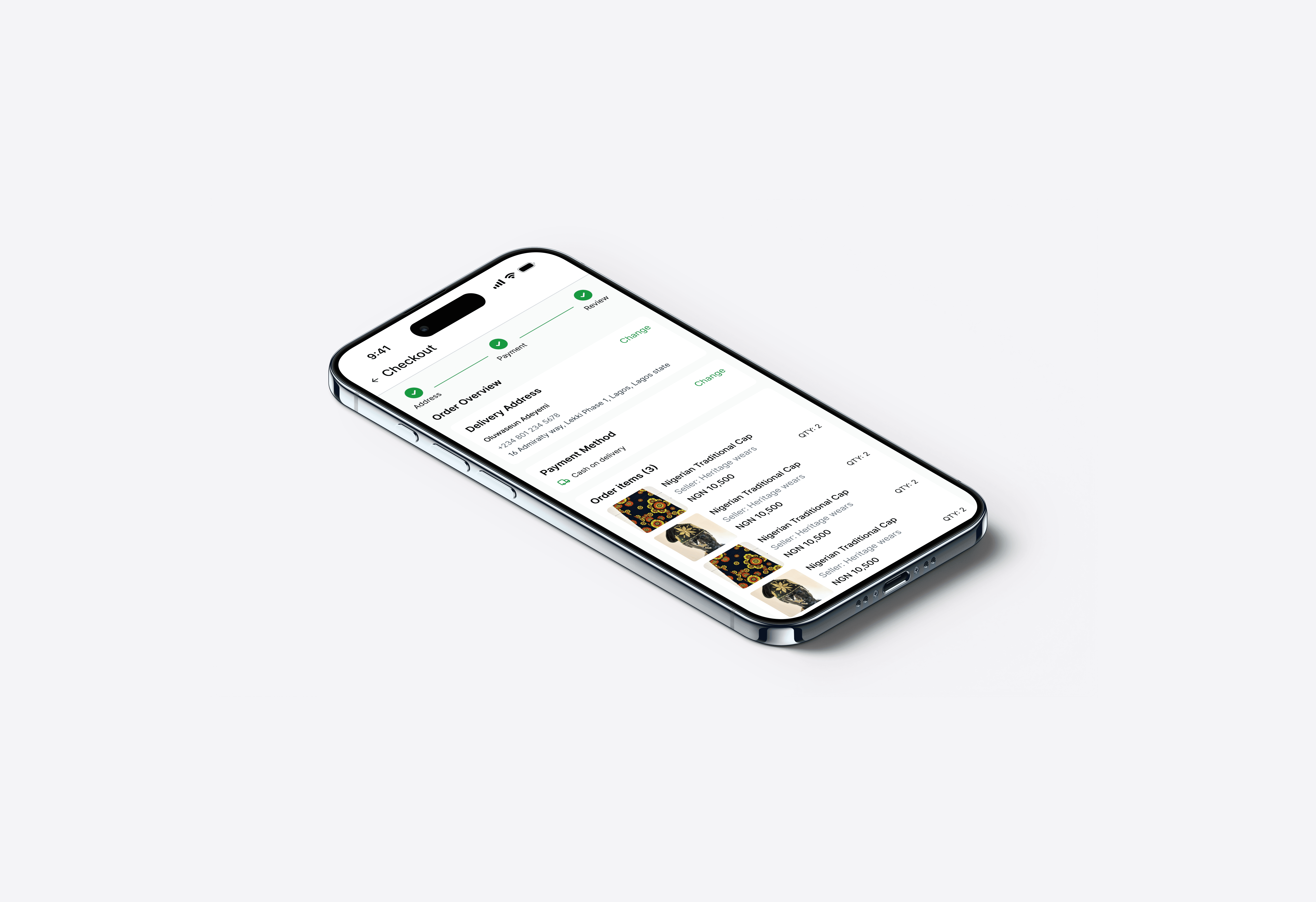
Designed a mobile-first interface with simple navigation, verified seller indicators, product pages with reviews and ratings, and a streamlined 3-step checkout flow.
Prototyping
Built interactive prototypes in Figma covering the full buyer journey, browse, cart, checkout, payment, and order tracking.
OUTCOME
The design delivers a trustworthy, mobile-optimised shopping experience tailored to the Nigerian market, addressing the core barriers of fraud, poor UX, and unreliable delivery that have held back e-commerce adoption.
Designed for a market where trust is the product, every interaction built to convert a skeptical first-time buyer into a repeat customer